

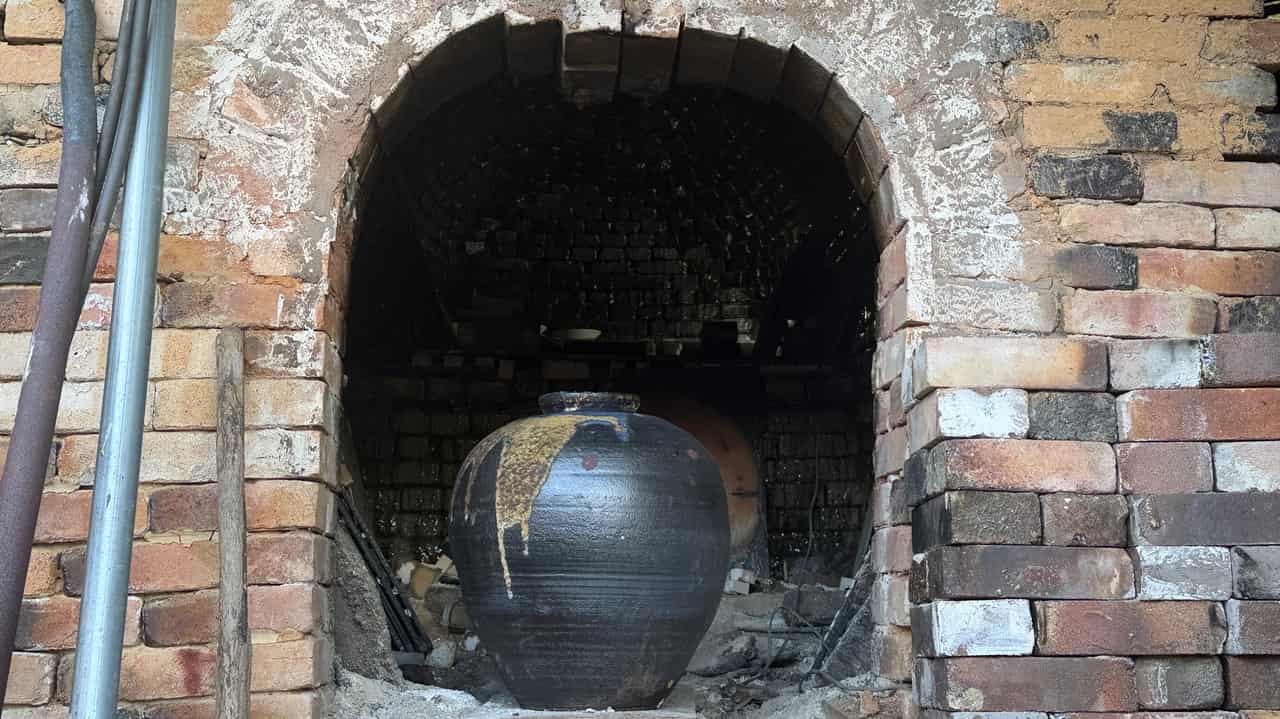
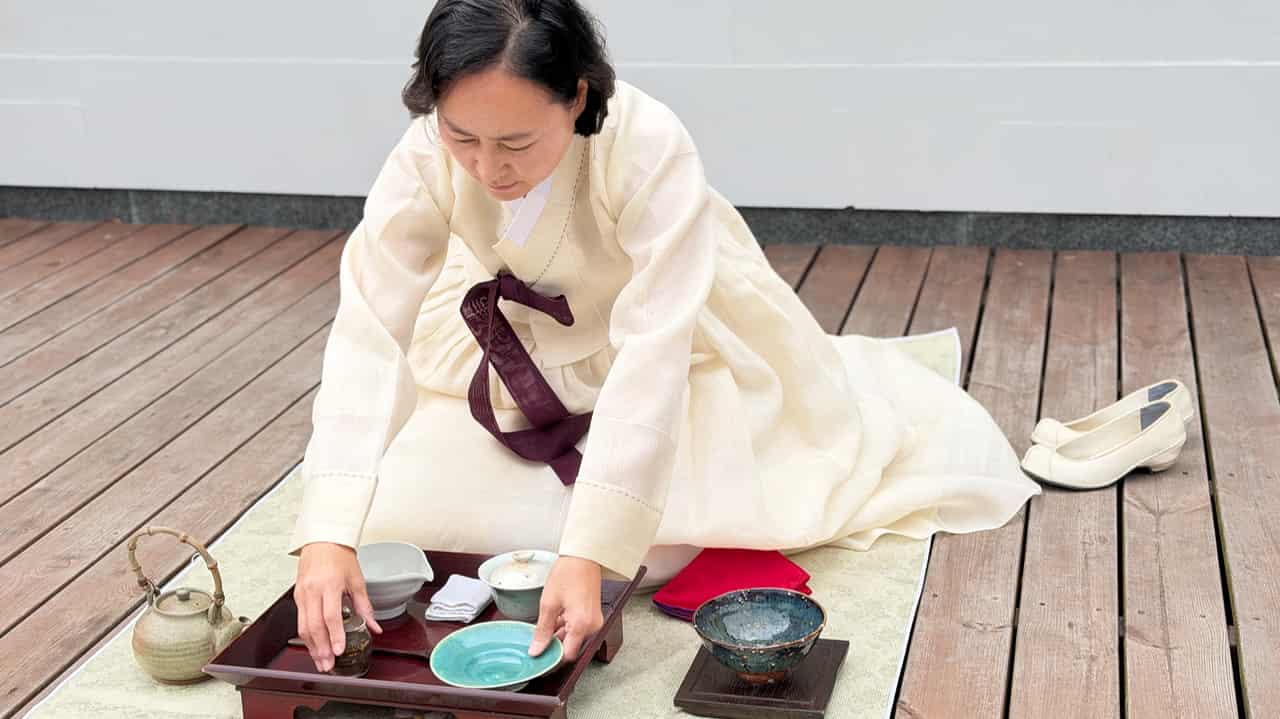
 Right now I’m with Tae Sungyong in South Korea. We’re working hard making onggi, throwing, and firing a few wood kilns, among them a tonggama.
In October I took the express train from Seoul to Cheongdo. Tae and Marie from France met me at the station. The three of us are working together for three weeks: building onggi, throwing moon jars, and loading and firing two wood kilns.
Why do I, who have been working with ceramics for over forty years, travel to South Korea to learn? The answer has to do with what happens when potters meet.
Every time I meet an experienced potter, something happens. We all have different ways into the craft. Different ways of handling the clay, working with it and firing it.
Tae works with the tonggama, the Korean wood kiln. He has built wood kilns for over twenty years: his own three-chamber kiln in 1998, and since then kilns in several places in Korea and a tonggama in Angoulême, France. He wants to help rebuild Korea’s ceramic tradition, the one that was broken during the occupation and the war, and make the tonggama known outside Korea.
Something always happens when we meet
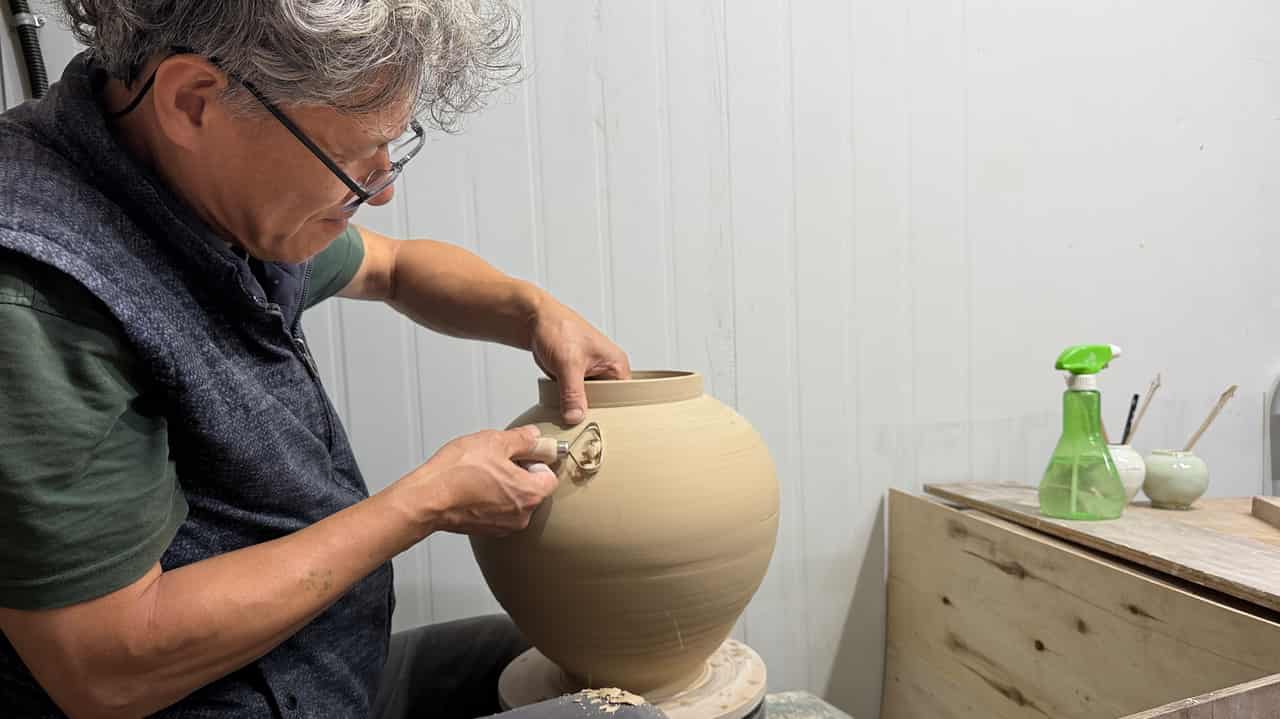 Tae is both very modern and very traditional. The truly traditional part is the tonggama kiln, and his free way of creating both inspires and frees me.
At home I mix my clays myself. Here I get an insight into how Tae relates to clay. It doesn’t differ much from mine, except that he adds more kaolin, a natural kaolin that is slightly pink. The base clay has a good deal of porcelain and some stoneware clay, and in his big clay mill we prepared the clays for our onggi.
In between, I throw as usual, but what’s different is the clay. It has a completely different character from our European stoneware clays.
Onggi, and being a beginner again
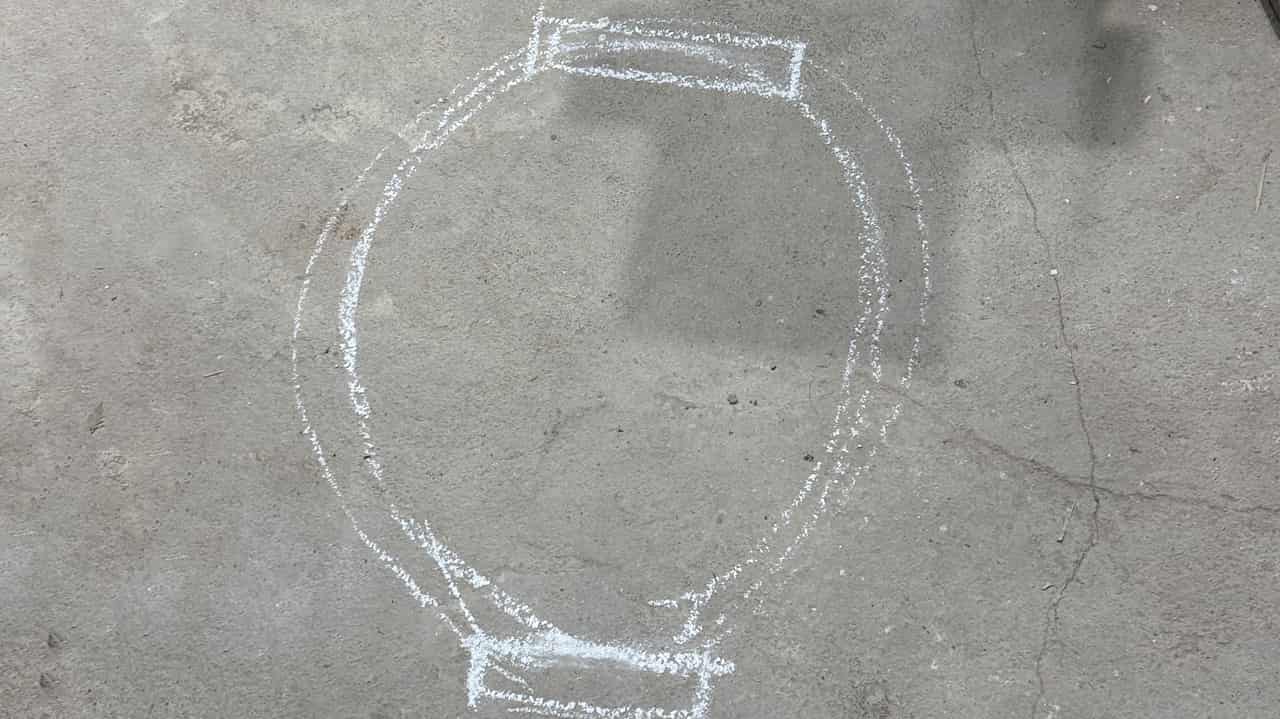 Onggi are the hand-built kimchi jars. They’re built in sections, a little on day one and a little more on day two. Once you master the technique you can build as large as you like, while throwing always has its limits.
Onggi demands a lot. A great deal of timing, and a feel for how the clay firms up and can be stretched as you work. It doesn’t turn out the way I want when I build my onggi. I have to ask for help and Tae explains, and that has been needed several times. I’ll never become an onggi master, but the technique is interesting and useful for many things.
Another day Tae showed me how he makes plates. He doesn’t throw them, he shapes the clay with his hands. It looked easy. When I then tried it myself, I was a beginner again. With the plates it’s not about tools, it’s about how my hands handle the clay, nothing else.
That’s the beauty of learning from someone who has worked with something for a long time. That person can show you the shortcuts. I practise, go back and ask when we start getting into the details, and practise again. It’s the small, small changes that make the difference.
Two wood kilns
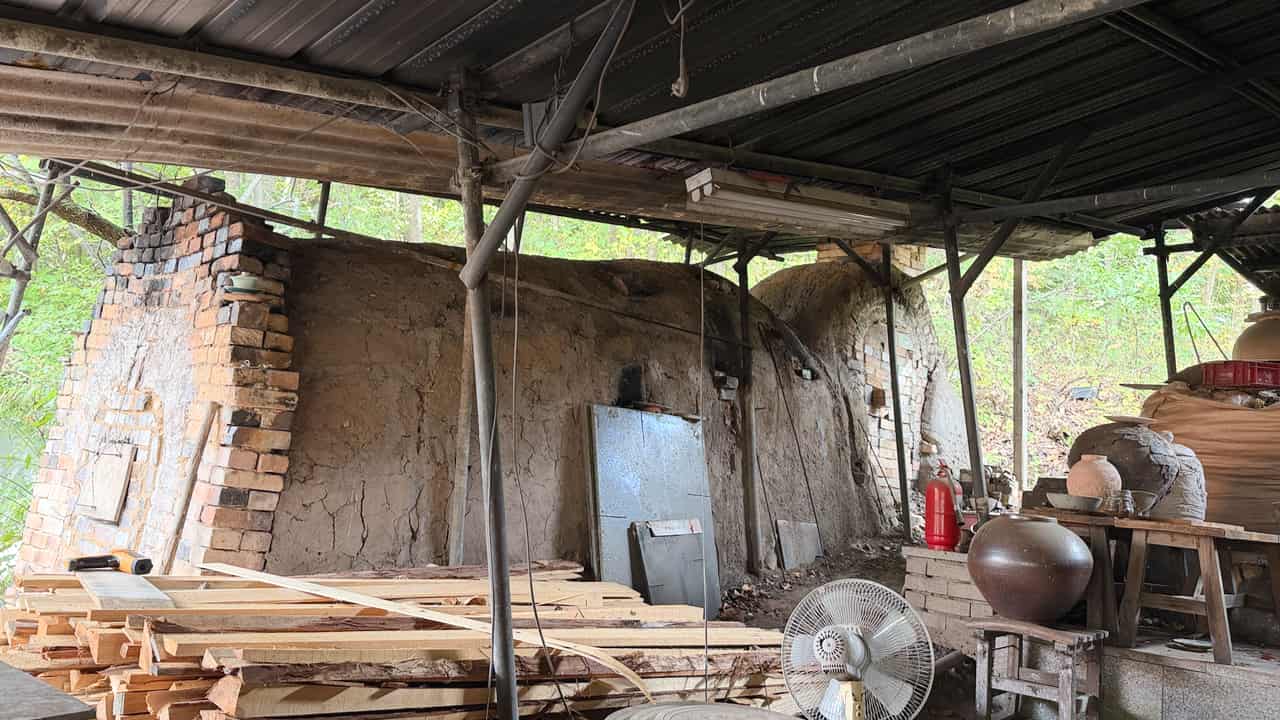 What surprised me is that Tae bisque fires in a wood kiln. I’m used to bisque firing ware for wood firing when I travel and fire in other places, but not in a wood kiln. The bisque kiln has chambers one after another up the slope, and this time we only used the top one. Tae bisque fires low, to save wood. It’s going to be fired again afterwards anyway.
Tae preheated the bisque kiln at midnight and stoked carefully for two or three hours. The bricks were cold and some of the ware was still damp. In Europe I’ve often done the same with a gas burner on a low flame. Here it was wood. No gas and no electricity, Tae has no electric kiln at all. He has his own philosophy about how he wants to work.
After the bisque firing we glaze with his three or four glazes, and then they will meet ash and fire in the tonggama.
More about the tonggama firing in the next post.