

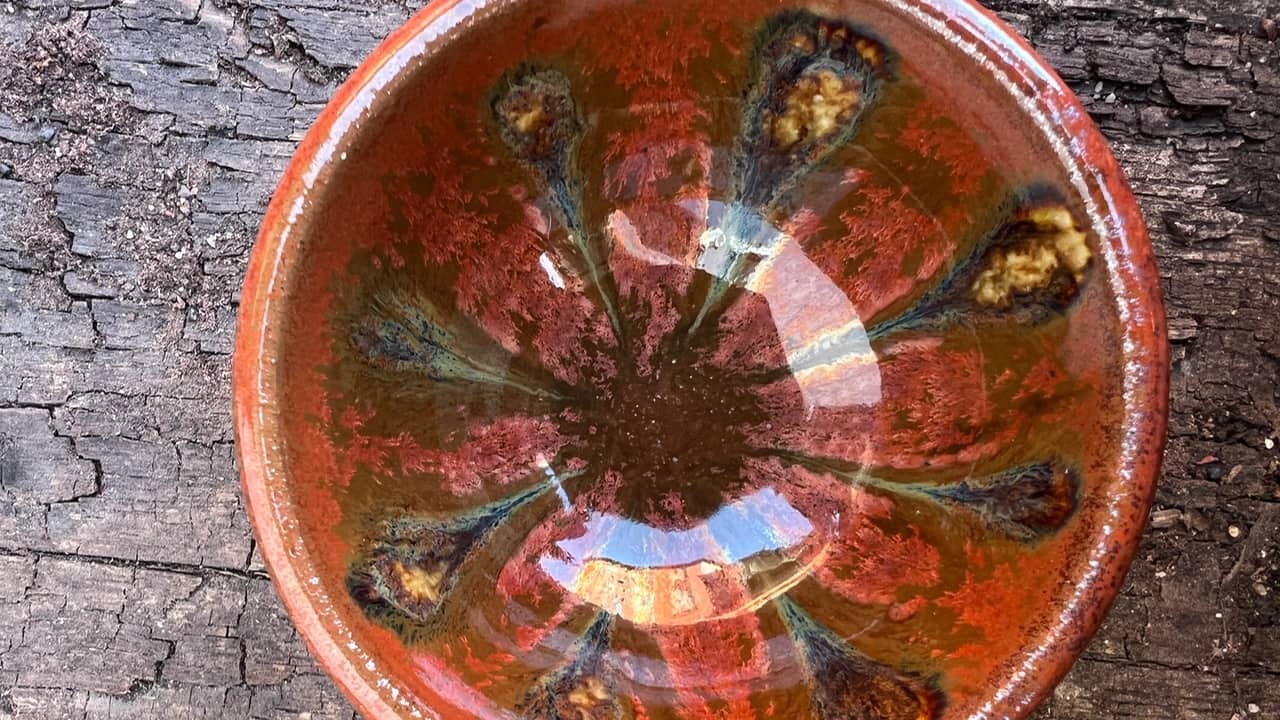
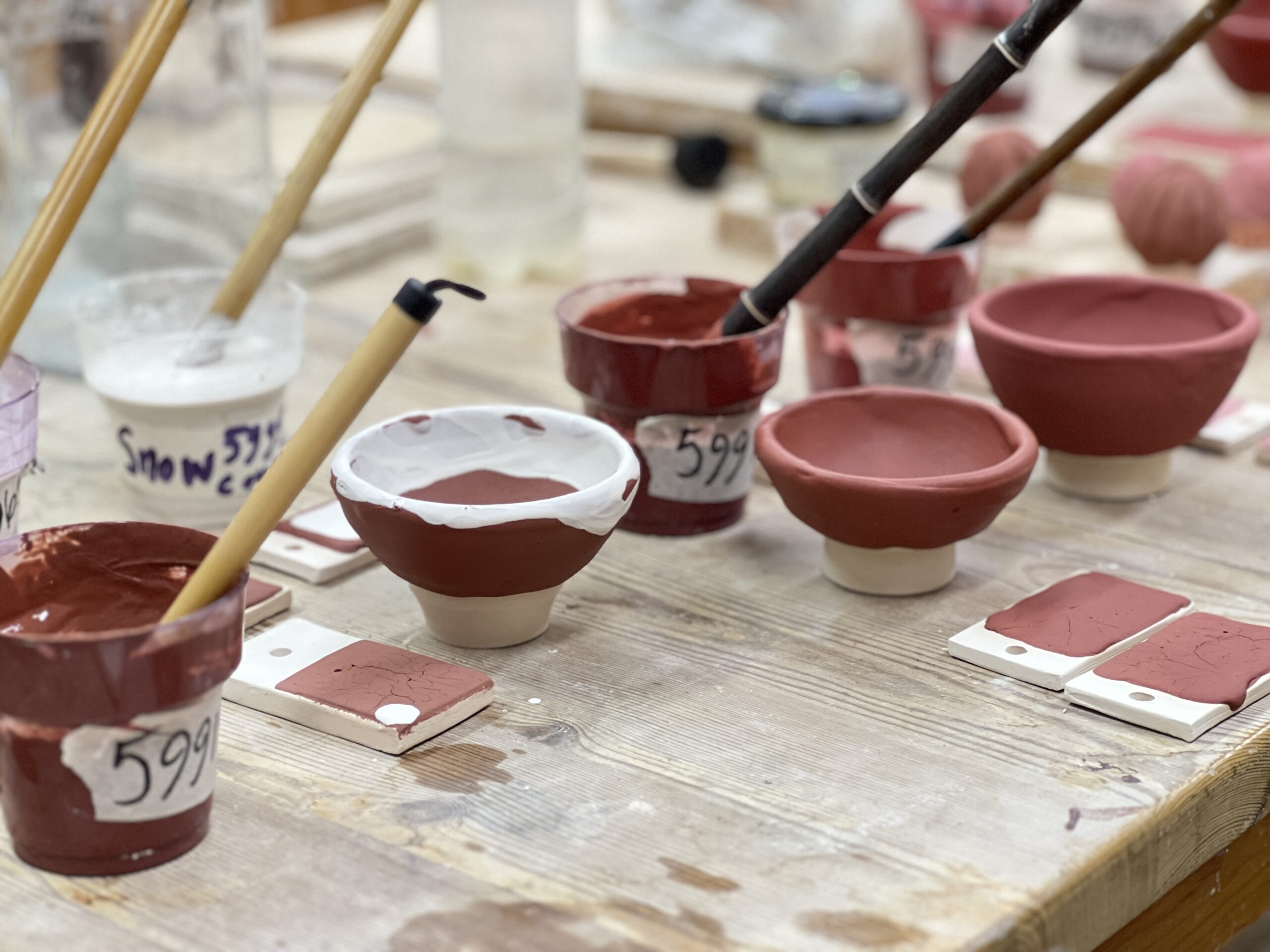
It starts with a few raw materials such as feldspar, kaolin and quartz — a few more are needed to give the glaze its character. After firing, you can have a glaze that’s entirely your own. Glazes are one of the things about ceramics I never tire of. Buying ready-made glaze works. But it’s not quite the same as having mixed it yourself, knowing what’s in it, and being able to adjust it to suit your own firing.
I’ve been mixing my own glazes for over forty years. Yet it still happens that I open the kiln and am surprised, both pleasantly and unexpectedly. The glaze has melted a little more than expected, taken on a shade I hadn’t foreseen, or reacted with the clay in a way that’s hard to explain but easy to appreciate. That’s what keeps us going.
Raw materials, glaze recipes and what happens in the kiln during firing
A glaze essentially consists of three things: a glass-forming substance, a flux and a stabiliser. Quartz, feldspar, kaolin — words that sound technical but that fairly quickly start to feel natural once you’ve worked with them for a while. It’s about understanding what each raw material contains and contributes, and what then happens as they melt during firing.
It’s no harder than baking. Actually a little easier, since in ceramics we get to experiment without having to eat the failures.
Glaze tests are one of the most enjoyable parts of the work. Small test tiles, systematic variations, notes. Quite soon you have your own library and treasure trove of glazes that are entirely your own.
What is a chemically stable glaze, and why does it matter?
If you make functional ware — cups, bowls, plates — it’s important that the glaze is chemically stable. That means it doesn’t release metals or substances when it comes into contact with food and drink. It sounds complicated, but there are clear rules of thumb that make it manageable, and once you understand the basics it’s not difficult to judge whether a recipe is suitable for functional ware or not.
It’s something I wish more ceramicists were aware of.
Interested in learning more about glazes and geeking out over them with me? Click the link.
https://www.keramikkurser.se/glasyrintresse